When the task is done, the compounding work begins.
Pick a job to try this on: the Job Picker ranks your repeated jobs.
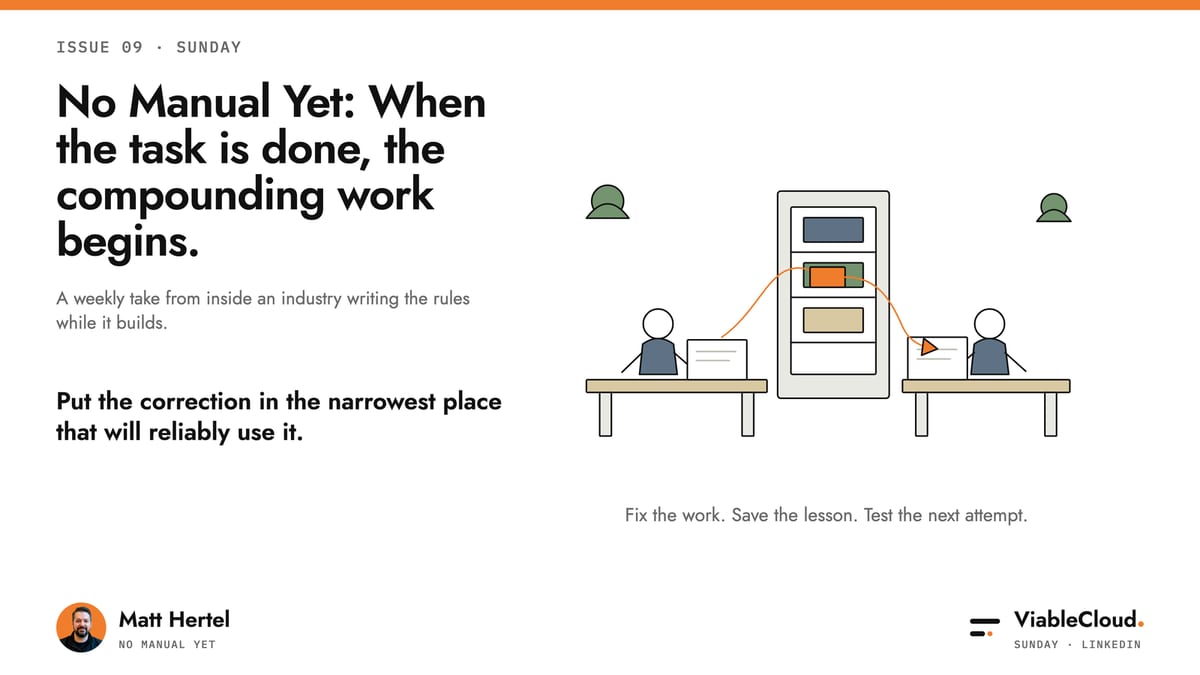
You're heard people raving about loops. A company is now a series of loops, loop engineering etc. You know the classic LinkedIn guru stuff. Then I realized that I was using loops too. Dang, I guess I'll be a LinkedIn Guru then.
Here's the simplest one: At the end of an AI session, just when is finally done, I ask it to do one more job.
I ask what went wrong, what would make the next attempt better and which changes are worth making now.
I've been doing this for a while, and it's made my work better.
Here's the main idea: fixing the output gets today's task over the line. The fix becomes useful when the next attempt actually uses it. Then you check whether it worked.
A lesson needs somewhere to live
A neat list of lessons at the bottom of a chat can disappear with the chat. It feels useful. Everybody nods. The conversation ends. The next session arrives with absolutely no idea that any of this happened.
Here's a hypothetical example.
An AI drafts a customer quote with the wrong customer name and the wrong figures. You correct both and send the quote. Today's task is finished.
You know what went wrong. You still don't know why. Find where the bad name and figures came from before you save another rule.
If the customer name came from an old template, replace it with a required input from the selected customer record. If the totals were guessed from the conversation, require them to be calculated from the agreed line items.
Those are two different problems with two different places to fix them. One belongs in the quote template. The other belongs in the instructions for calculating the quote.
Before adding another page of instructions, see whether an existing rule is wrong, vague or no longer needed. More setup is a strange reward for finding a problem.
Put the correction in the narrowest place that will reliably use it.
Saving those changes is only half the job. Run the next quote with a different customer. Check the name and totals. Then make sure something that already worked hasn't broken while you were feeling clever.
If the change helps, keep it. If it doesn't make the next job easier, narrow it or delete it.
And if the new rule fixes one problem while creating another, congratulations. You've found the next improvement.
Something you can implement by Friday
Take the last quote, report, presentation or build you finished. Keep the conversation, final output, corrections and failed attempts beside it.
Paste this into the same session:
Review this finished task.
What problems have we encountered in this session?
If we had to do it again, what would make it better?
What are 3 things that we can improve now?
For each improvement, show me the evidence, the smallest useful change, where it belongs and how we'll test it next time.
Don't accept three improvements just because you asked for three. If the session only supports one, one is plenty. We're improving the work, not filling in a form.
For each useful change, decide what happens next:
- Apply it now if it's small, safe and authorised.
- Save it for later if it needs approval or belongs in a wider setup review.
Anything saved for later needs a destination, an owner and a next action. “We should remember this” is how lessons go on a lovely little holiday. Then run one similar task with the updated setup and record whether the change helped.
As always I have a small gift for you. I packaged this all up in a skill that you can try out now.
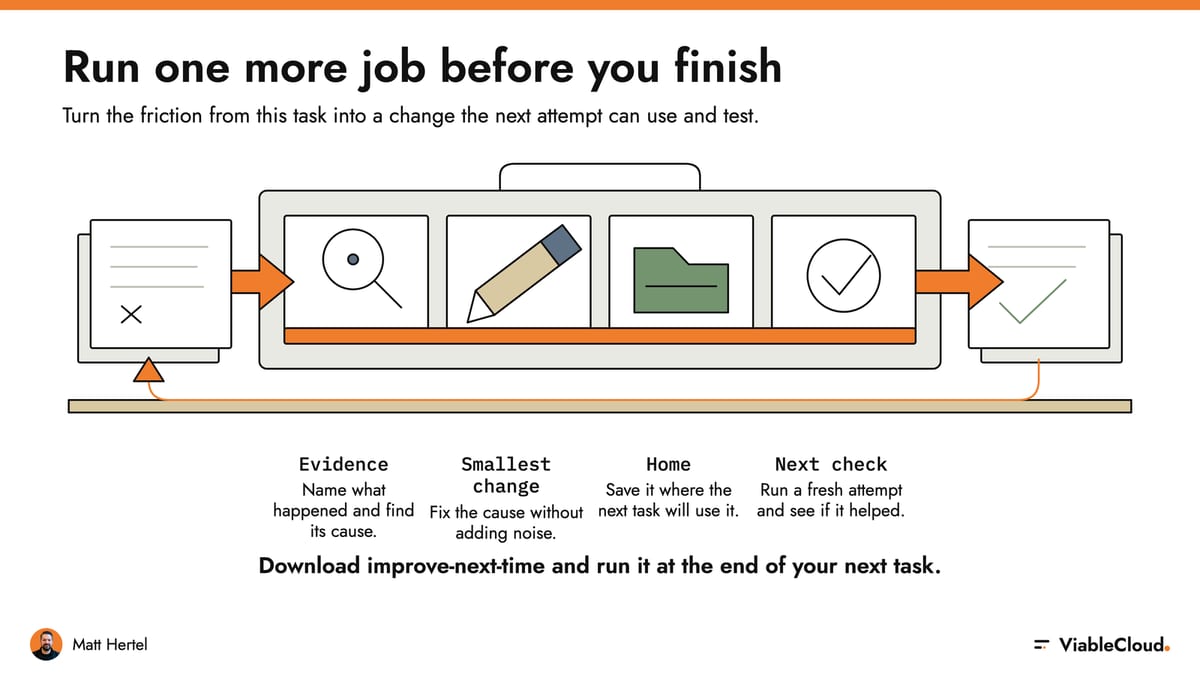
Is called improve-next-time. Invoke it at the end of every session and it'll guide you through your first workflow improving loop. You're now in the elite AI group of user who knows how to use loops, congrats!
No manual yet
I'm still ridiculously excited about how quickly ordinary work can improve when each attempt leaves something useful behind.
Apparently finishing the work now includes reviewing the work after everybody has already declared victory. Excellent.
You survived another week in this strange new world AND another one of my articles. Amazing!
Over to you now: what did you correct today that your next attempt still doesn't know?
Take it with you
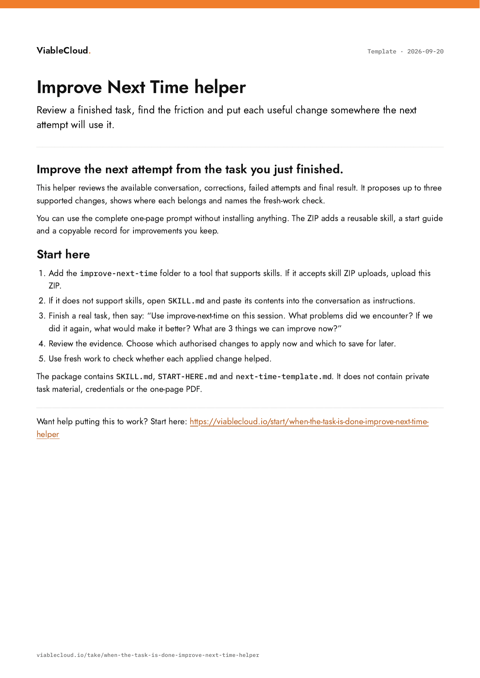
An installable skill ZIP with the full review method, a start guide and a next-time record.
ZIP · 5 KB
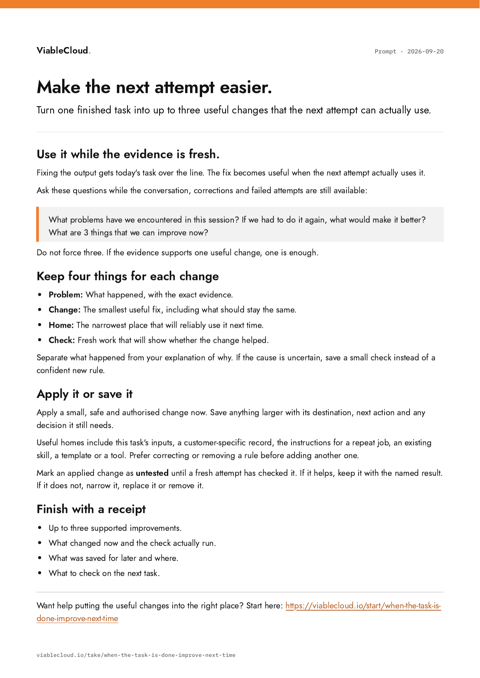
A one-page prompt for finding the friction, saving the smallest useful change and checking it on fresh work.
PDF · 74 KB