Template · PDF · 68 KB
Outbound at scale: the build guide
Turn one researched prospect into a repeatable job, then carry it through a sheet and a laptop app.
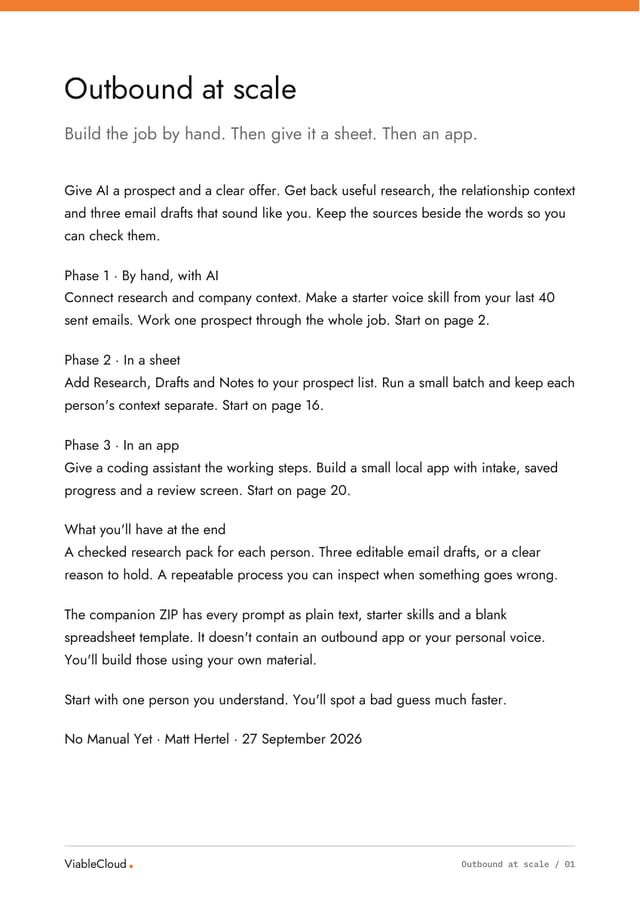
A 27-page PDF with three phases, copyable prompts, a worked email example and checks for the finished app.
The first part is open below. The download adds: follow every step.
Free. The link shows here and lands in your inbox. Nothing else.
What's inside
- Connect research tools, your CRM and company context.
- Extract a starter voice skill from your last 40 sent emails.
- Fill Research, Drafts and Notes in a prospect sheet.
- Build a laptop app with saved progress and a review screen.
- Use a fictional email example and practical checks.
How do you build AI outbound that uses real context?
Start with one person and one offer. Read your internal contact history, research the company and keep a source beside every fact. Draft only when you can explain why the offer might matter. Check the result before repeating it.
Then add Research, Drafts and Notes to your prospect list. Notes carries your directions. AI fills the research and drafts, preserves your notes and appends its questions. Try a small batch before processing the list.
Once those steps work, ask AI to build a laptop app around them. It needs a prospect or brief form, saved progress, evidence beside the drafts and a way to resume a failed step. It stops for your review.
Read Inside an AI-native company for the thinking behind the build. The starter kit gives you the prompts, skills and spreadsheet files separately.
Still to come, in the download
- Follow every step
Free. The link shows here and lands in your inbox. Nothing else.
Who's behind it

Matt Hertel. An engineer who has also run the company. Built and sold apps solo. Fractional CTO in startups. Every Sunday, one job start to finish, in No Manual Yet.
Every Sunday, one job start to finish. Read No Manual Yet
It goes with this issue
Issue 10 · 27 Sep 2026: Inside an AI-native company, you hand AI the whole job.
More to take
- Outbound at scale: the starter kit
Start with reusable instructions and a blank prospect sheet instead of writing the whole setup yourself.
- Improve Next Time helper
Review a finished task, find the friction and put each useful change somewhere the next attempt will use it.
- Make the next attempt easier.
Turn one finished task into up to three useful changes that the next attempt can actually use.